Biography · updated 2027
Samuelle Ducrocq-Henry, Ph.D.
Professor-researcher · Ph.D. in communication · Inventor (patents) · Founder · Artistic director · Author · Artist
Expertise: serious gaming, interactive storytelling, research-creation, artistic direction, 2D/3D and video-scenic creation.
- Holder of patents registered with INPI, France (2011: group pedagogy; 2022: cultural archiving).
- Wrote, produced and staged large-scale live shows for the general public with 18 artists (2014-2022), applauded by more than 15,000 spectators.
- Co-founder of two international theme parks (Canada, United States) offering artistic events and game-based learning to the public.
Samuelle Ducrocq-Henry was appointed a regular university professor at the Université du Québec en Abitibi-Témiscamingue (UQAT) at the age of 25. She holds a bilingual Ph.D. in communication, earned jointly at the Université de Montréal, Concordia University and UQAM, a master's degree in interactive arts and multimedia, and a bachelor's degree in fine arts with a concentration in 2D/3D creation.
Born in Paris in 1977, she joined a public sport-study program at 13, then won a scholarship to the Lycée International Jeannine-Manuel before emigrating to Canada at 19. An international athlete for Canada (two World Cups), she exhibits and performs on stage alongside large animals, whose reactions to virtual reality she studies, and has practised several art forms since adolescence (piano, cello; author, composer, painter).
A multidisciplinary profile
Identified as gifted at the age of 4 by the Paris public school system, Samuelle has an original and inventive profile. As an adult, she distinguished herself through inventions, artistic creations and athletic performances in very diverse academic and professional settings. Her atypical profile, combining the artistic, the athletic, the intellectual and the political, led to a remarkable academic path: a tenured professor at 25 and a Ph.D. in 2010. She teaches the arts at the undergraduate and graduate levels as a permanent professor-researcher at UQAT; she is also a performing-arts author, an equestrian athlete and artist, co-founder of a theatre and two theme parks with a troupe of artists, and a former political candidate.
A mother of two boys, she lives in Canada. Her husband, Fabien Rochard (stage artist, haute-école rider and former member of the French Republican Guard cavalry), runs horse-themed parks in the United States. Alongside teaching new technologies at UQAT, she pursues her work in arts, technology and communication, in research, teaching and the performing arts, drawing on the specific features of the entertainment industry, video games and interspecies communication, at the crossroads of research on large animals, academia, the arts and animal behaviour science.
Academic career
UQAT appointed her professor of the theory and practice of interactivity and new media, specializing in 2D/3D creation, when she was only 25. She developed expertise in serious games before turning to mainstream entertainment and live video-scenic shows. Since 2002, she has taught 2D/3D creation, video-game arts and game writing in UQAT's Department of Creation and New Media.
In 2007, she founded and coordinated UQAT's first Montreal campus, dedicated to 2D/3D creation and video games, which she directed while helping create innovative university programs in video games and new media in Canada. In less than ten years, the campus increased the department's course offering and enrolment tenfold, among Quebec and international students, and established its reputation.
Awards and honours
Her skills and artistic work earned her several scholarships, including one from the Lycée International Jeannine-Manuel at 17, and various nominations: the Ouest-France mathematics competition and the Concours général (philosophy) at 18.
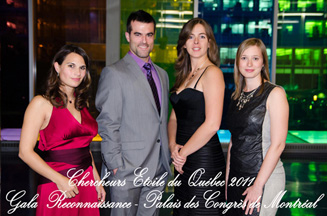
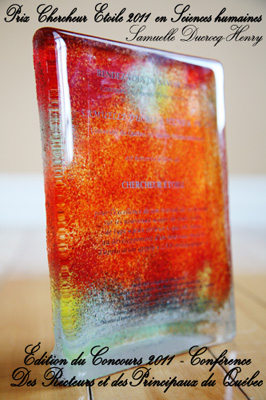
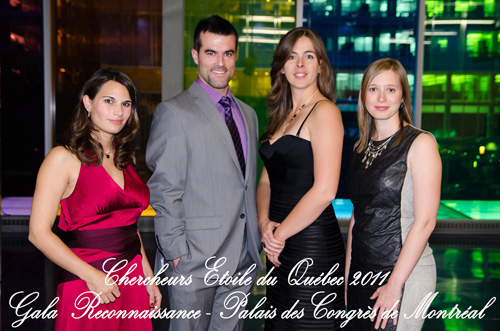
Following her innovative doctoral thesis, Les tribus ludiques (“Tribes in Play”), on how young people socialize through networked games, she rethought their use in the classroom. On October 6, 2011, at the Palais des congrès de Montréal, she received the 2011 Quebec Star Researcher Award in the Humanities (Chercheur étoile), presented by the CREPUQ and the rectors of all Quebec universities, from Chief Scientist Rémi Quirion. The award recognizes her work on group and immersive teaching using a game engine for collective simulation-based training, opening the way to significant savings in higher education: the Pedagogical LAN (patent no. FR1150053). She has also contributed to several scientific journals.
In sport, Samuelle pursued an international career in equestrian sport and helped found the development of equestrian team sports (horse-ball) in Canada. In 2006, her team won the Angers-Beaulieu Cup at the Bromont Equestrian Games and, in April 2006, she represented Canada at the Horse-Ball World Cup in Buenos Aires, Argentina. The only Canadian athlete to requalify for the next World Cup, she again proudly wore Canada's colours in Portugal (Ponte de Lima, August 2008).
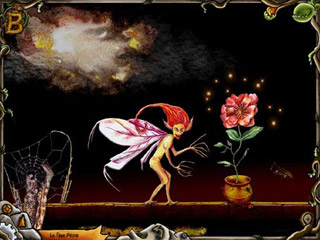
On October 15, 2006, she also won the Special Jury Prize of the international Möbius Awards with 50 undergraduate and graduate students she had supervised since 2005 for the International University of Multimedia. Coming from some ten universities (France, Brazil, China, Burkina Faso, Tunisia, Madagascar and Réunion Island), they created and produced “The Immersive Bestiary,” an interactive work (DVD-ROM) based on folklore from around the world.
Public and political engagement
Active in the video-game industry since 1999, and a guest speaker on some thirty television programs and in faculties across Europe and Canada, she has worked with public bodies on serious-game simulation prototypes, notably in security with the Montreal police (SPVM), and in education, law and cybertherapy.
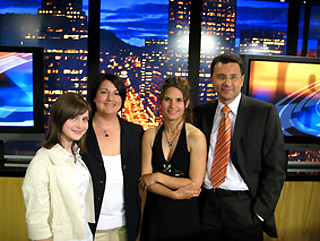
She occasionally appears live on Radio-Canada's evening news and became a public figure, serving on the board of the Arcadia Festival, the first festival of its kind dedicated to video games, and on the editorial board of the Acfas, which promotes research in French-language academia.
Her innovative ideas drew attention from political circles during the 2012 Quebec student strike (“Maple Spring”), while in June 2012 she created, with engineers, an online platform to simulate electoral trends more quickly (auvote.com). In support of the student movement, she wrote an open letter that was published and widely relayed by Quebec media (“Open letter from an outlaw professor”). In it, she proposed optimizing distance education through repurposed video-game platforms (under the educational exception in copyright law), and an international Cloud University that would let young people in remote regions train in their chosen field, a concept close to her Pedagogical LAN invention.
Jean-Martin Aussant, MNA and leader of Option nationale, chose her as a candidate in the riding of Bertrand in 2012. She ran in three election campaigns (2012, 2017 and 2018): for Option nationale, for the Bloc Québécois with Gilles Duceppe, and for the Parti Québécois. After the 2018 election, won by François Legault's CAQ, she withdrew from political life.
Research-creation and the performing arts
In 2018, Samuelle co-edited with Professor Lynn Hughes (Concordia) a special feature of the Acfas magazine Découvrir on research-creation, its many forms and its stakes in academic and artistic settings, having served on the Acfas for two years.
After fifteen years of teaching 2D/3D creation for video games, interactivity and university exhibitions at UQAT, she wanted to experiment on a larger scale at the Théâtre Cavaland. There she founded Manimalia, a research-creation laboratory for video-scenic experimentation devoted to live performance with artists and large animals rescued by the equine sanctuary she sponsors in Quebec's Laurentians. In this lab she designed the international project CHAMANES 2.0 (“Shamans 2.0”): a 450-metre interactive night trail through the forest, inspired by ancestral cultures from around the world, which profiles each visitor (like the player of a participatory, contemplative video game) and reveals their totem animal at the end. A 3.0 version adds actors and horses performing some of the trail's nine attractions live. Her aim is to give city children, who know horses less and less, affordable access to them through the arts, technology, live performance and a ritualized initiation on the theme of shamanism.
Horses in particular, which she has worked with as an international athlete since the age of 13, are the focus of her research-creation on animal cognition in virtual-reality contexts. She has developed an understanding of interspecies communication for the stage, which led her to design intervention and team-building tools for both the arts and psychology.
Samuelle is deeply interested in virtual reality and in the cognition of large animals, using IQ and EQ tests that probe animals' intellectual and emotional quotients. Her remarkable ability to decode animal behaviour has earned her growing recognition in equine-assisted therapy and assistance-dog circles. In October 2019, she presented the first results of this research at UNESCO (Paris) and at the École polytechnique as a Canadian delegate; then to graduates of the Cadre Noir of Saumur (January 2020); and, in 2021, as an instructor in an international online course on equine cognition offered by the International Conservatory of Equestrian Arts and Cultures in partnership with the Sorbonne (Paris).
Thanks to this strategic position at the crossroads of the video-game industry, artistic creation, video-scenic shows and the management of large animals in virtual-reality contexts, she was approached in 2024 by a headhunter for Beyond Capture, North America's largest motion-capture studio, which needed very specific horse captures for video-game giant Bethesda, to obtain data applied to 3D animal meshes for various films and games. The shoot took place entirely in the Théâtre Cavaland's experimental lab: 88 markers per horse, 92 cameras in the theatre, five days of capture.
In 2011, Samuelle discovered the benefits of equine therapy and joined fifteen artists to found the troupe Opéras Équestres du Québec, which has given more than 200 performances to date. These productions are supported by partners including the International Conservatory of Equestrian Arts and Cultures, the Pays-d'en-Haut regional county municipality and the town of Sainte-Marguerite-du-Lac-Masson (Estérel), as well as by equestrian and military figures from the École polytechnique (Paris), the Sorbonne and the Cadre Noir of Saumur.
The productions also involve UQAT undergraduates, who innovate in the shows' 3D components. Bringing together some fifteen riders, acrobats, artists and horses, supported by interactive video projection and 3D virtual sets built on a real-time game engine (Unreal), the shows synchronize sound, projection and light with the emotional interplay between humans and animals in immersive environments. The performances are spectacular for the audience and for the horses themselves, which react to the luminous avatars, a fascinating observation.
Since 2014, Samuelle has written, directed and produced large-scale shows combining artists, horses and virtual environments projected on a giant screen, synchronized with the performers on stage: Cheval-Artiste: Memoirs of a Drum Horse (2014), Équilibre (2016), Chevaleresque (2017), Les Amériques (2018), Le Viking (2019), Épik (2020) and Equia (2021), applauded by more than 15,000 spectators at the Théâtre Cavaland. Her next production, Flyé!, written in 2022, is expected in 2027-2028.
Philanthropy and interspecies communication
In 2006, she founded with her students, based on her own idea, a virtual fountain website (The Trevi Fountain) that grants wishes free of charge thanks to the power of networks: people post their wishes freely, and others can answer and grant them. TV host Denis Lévesque invited her to present a “good mood” segment featuring the week's granted wishes on TVA/LCN.
In 2011, with the family of her first husband, Geoffroy Garnier, she acquired a 150-acre property in the Laurentians, where together they founded Cavaland, a horse-themed park. With a troupe of volunteers and artists, they cared for and rescued more than 65 “artist horses” and presented talks, demonstrations and then shows, written and directed by Samuelle, with Geoffroy Garnier as technical director, Lenka Vernex as choreographer and set designer, Fabien Rochard as equestrian director, a dozen Quebec, American and French artists on stage, and dozens of volunteers backstage for care and stable management. The goal is simple: 100% of the proceeds go to the horses' veterinary and daily care.
It was a risky bet, but thanks to the whole troupe, and with almost no advertising, it worked: Quebec audiences came, and often came back, to each production written by Samuelle, to discover the extraordinary stories and rehabilitation of these large animals through the arts and the stage. Samuelle calls them true artist horses, in an approach to equine therapy based this time on mutual benefit. More than 65 horses have been treated or saved over the years by the Cavaland sanctuary: some after serious bullfighting injuries (the stallion Gladiateur, gored by a bull, is one example), others rescued from slaughter or abuse, or simply retired from the stage or film. All are studied using a 12-step profiling method whose principles and findings she published in her Petit Manuel d'équitologie (2021), and which she presents on stage to various associations, sometimes as an opening act for the main shows; volunteer spectators are then invited on stage to apply the interspecies communication principles she develops.
Some animals are rehabilitated through the lens of the intellectual and emotional intelligence of large animals, placed at the service of human assistance needs. Samuelle has developed innovative approaches and procedures, including hypnosis on horseback. Fascinated by forms of interspecies communication, she designed a series of animal IQ tests to improve the training of horses and dogs for assistance work; she herself benefited for years from her former assistance dog, Poème, who made her aware of these issues.
She has presented some surprising results obtained with the artist horses rescued by the Cavaland Foundation, the Blue Ribbons, to the public and at talks for associations supporting autism (ASD). She maps group hierarchies within herds, with a set of “personalities” revealed during stage trials presenting a kinesthetic dialogue between humans and animals (inspired by Wilsie and Vogels, 2021). In 2023, she married Fabien Rochard, who runs a 117-acre animal park in the United States (Horse Kingdom) with French and Quebec partners, for rehabilitated, retired or recovering animals.
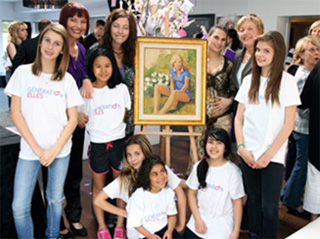
Dedicated to helping people in need (deaf people, children on the autism spectrum, veterans who need emotional-support dogs in public spaces), Samuelle has become increasingly involved since the COVID-19 pandemic in the well-being and understanding of autistic people. Having herself been officially diagnosed with Asperger's syndrome in 2021, she also volunteers as a mentor for Génération-Elles, a foundation that supports women and girls in need.
Drawing on Impact Therapy techniques (developed by Canadian psychologist Danie Beaulieu, Ph.D.) under real stage conditions, Samuelle wrote a protocol to help women and autistic people, which she named Animal Star Therapy: a unique horse-based therapeutic support approach combining the performing arts, relaxation and hypnosis on horseback, built on the natural empathy she observed in the horses she had rescued toward people in need. Over the years, she has met leading figures of the equestrian and performing-arts worlds (Pat Parelli; Sylvia Zerbini and Frédéric Pignon of Cavalia), as well as tourism stakeholders in Marion County, Florida, to promote the horse through art and technology, an approach praised by her peers.
Around 2022, Samuelle completed a short university program for UQAT (pending approval) to train students in digital storytelling for the stage and in project management for large-scale interactive shows.
Continuing education and patents
Samuelle believes in lifelong learning through practice. Between 2018 and 2024, she completed three professional training programs in fields that fascinate her: arts, design, culture and animal cognition. She earned a certificate from HEC Montréal in a short program for creators and professionals in the cultural sector. In 2022, she also completed the assistance-dog training program of the Académie Chien in Sainte-Thérèse, as well as specialized training with exotic animals (bison, wolves) supervised by renowned trainer Jacynthe Bouchard (Zoo Academy). These programs help her design IQ tests adapted to different species in order to optimize the selection of animals intended for human assistance.
In design, she completed three sessions at the École de joaillerie de Montréal to perfect her gold and silver jewellery making, in order to create memorial sculptures inspired by the monohedra popularized by astrophysicist Jean-Pierre Petit: a form of “quantum” art in the shape of rings, between sculpture, painting, jewellery and funerary art, to be worn, seen and touched… forever. This reflection connects with the patent she developed in 2021 to support digital memory in the funeral sector: on January 21, 2022, INPI (France) approved her most recent patent, for the artistic and technological memorial HomeAge (patent no. FR1906601), an interactive art kiosk that posthumously shares the memories, images, works, music and messages chosen by the deceased, to pass a timeless legacy of thought on to their descendants. These are values she seeks to pass on as an artist and as a teacher, encouraging her students to ground their work in a stance on our times and their challenges.
As an author, after her doctoral thesis (Les tribus ludiques, UQAM, 2010), Samuelle published a first novel, Les Mémoires d'un cheval-tambour (2014, Éditions Textes & Contexte), followed by Petit Manuel d'équitologie (2021), Le Manuscrit des prisonniers (2022) and La Ferme humaine (2023).
In 2022, she completed the script of the illuminated interactive night trail Chamanes 2.0, designed for the Cavaland Canada site and presented to Quebec municipalities and funding bodies (additional funding pending). Several partners have signed on, including Creativ Nation (event technology management), the Pays-d'en-Haut regional county municipality and the regional coordination table. The project aims to offer a winter evening attraction for families from Montreal and the Laurentians, who have few outdoor evening activities during the long Quebec winter.
In 2026, Samuelle is finalizing an autobiographical novel and its adaptation for television and film: Bienvenue à Cavaland (“Welcome to Cavaland”) breaks new ground by mixing archival footage and authentic show excerpts with a fiction truer than life, in which viewers are invited to write the next chapter of the two animal parks, the shows and their artist horses, several of whom have lived by her side for more than 24 years and can still be visited in Canada and the United States.
In pictures