Research and research-creation
Research
Publications, patents, serious-gaming prototypes and research-creation projects.

In her thesis, Tribes in Play, Samuelle Ducrocq-Henry mainly proposes transferring the benefits of the LAN principle to institutions, so that it serves as a group-intervention device in training and therapy.
Her expertise and partnerships with the video-game industry regularly lead her to write articles and give interviews and public talks for educational institutions, the press, the media and major events: the Arcadia Festival (board member 2003-2008), conferences of the UQUOPS, TechnoCompétences, Alliance numériQ, the Acfas, the Université de Sherbrooke, as well as the Journal de Montréal, Radio-Canada, TVA and TV5.
All articles, talks and TV, radio or press excerpts on this site are freely available. When using them, in whole or in part, please cite all sources (media, dates, nature of the research, researchers, authors and photographers). Any use beyond purely academic purposes (distribution, promotion, etc.) requires written permission (contact us). This work is above all collective; we thank everyone who made it possible.
Scientific publications
- Ducrocq-Henry, S. (2011). Apprendre ensemble en classe via des jeux vidéo populaires : le modèle du LAN pédagogique [Learning together in class via popular video games: a Pedagogical LAN model]. Canadian Journal of Learning and Technology, 37(2). doi.org/10.21432/t2dw2f
- Ducrocq-Henry, S. (2011). The Therapeutic LAN: a group intervention method involving network video game as social simulator. Journal of CyberTherapy and Rehabilitation. 16th International CyberTherapy Conference, UQO, June 22, 2011.
- Ducrocq-Henry, S. (2011). Les tribus ludiques du « LAN party » [Tribes in Play]. Doctoral thesis, UQAM. archipel.uqam.ca/3826
- Ducrocq-Henry, S. (2013). L'Université-Nuage [The Cloud University]. Traces, 7(3), January 25, 2013, p. 13. See also the Cloud University project.
Essays and columns (in French)
- L'angélisme numérique (Digital angelism)
- Web 2.0: a medium reinventing itself and catching the others off guard
- Serious games: video games for better living and training the next generation
Patents
- Pedagogical LAN: patent no. 11 50053 (FR1150053), “Method for learning an activity and/or pedagogical teaching and system implementing this method.” Filed with INPI in 2011.
- HomeAge: patent no. FR1906601, approved by INPI on January 21, 2022. An artistic and technological memorial that posthumously shares the memories, images, works, music and messages chosen by the deceased.
Serious-gaming experiments
The Cloud University approach
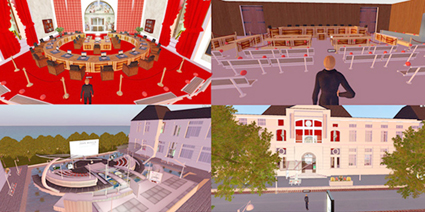
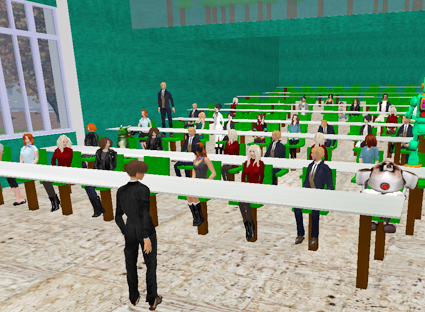
First “Cloud University” experiment, in a French-Canadian partnership: teaching based on the Pedagogical LAN method extended internationally (WAN). Learn more about the project.


Cybertherapy (2012)
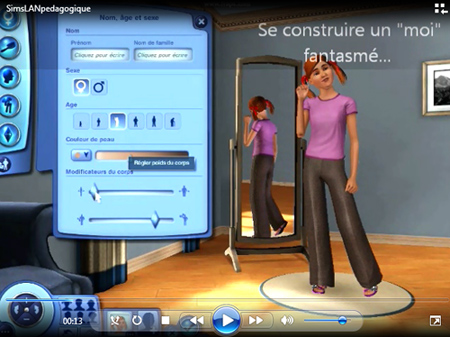
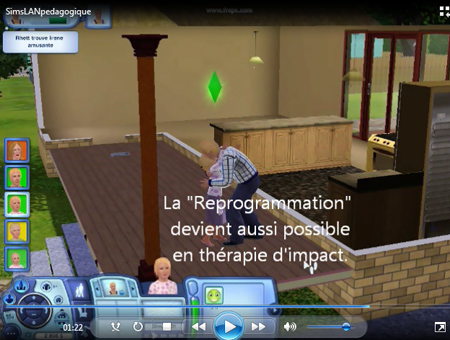
Collaborative inter-university cybertherapy projects led by Professor Stéphane Bouchard (UQO): immersive and cathartic approaches in Impact Therapy.
SimuLAN: tactical deployment simulation (2011)
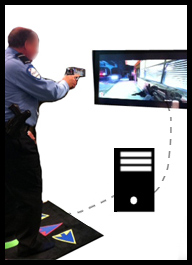
Developed for the Montreal police (SPVM): a modified networked video game (SWAT III) for tactical movement and seamless gesture coordination, optimizing immersive adaptation for all officers.
The Pedagogical LAN (2010)
First public experiment with the patented method: see the collective driving simulation.
Research-creation
Video-scenic shows and Manimalia (since 2014)
Writing, artistic direction and production of shows combining artists, horses and 3D virtual sets built on a real-time game engine: Cheval-Artiste (2014), Équilibre (2016), Chevaleresque (2017), Les Amériques (2018), Le Viking (2019), Épik (2020), Equia (2021). Next creation: Flyé! See the biography.
Chamanes 2.0 (2022-…)
An illuminated, interactive, four-season night trail designed for Parc Cavaland (Laurentians, Quebec): a 450-metre forest path that reveals each visitor's totem animal.
Real-time election simulator: auvote.com (2012)

Successfully launched in June 2012 (TVA Nouvelles article, June 15, 2012). Auvote.com was a free, anonymous vote-simulation platform that closed every Sunday night and reopened every Monday morning, for virtual elections responsive to current events. It listed all parties registered with Quebec's chief electoral officer (including a blank vote), with one vote per household per week.
Designed by Samuelle Ducrocq-Henry with political scientist Denis Monière (Université de Montréal), the platform offered weekly virtual elections and “fiction elections,” by and for Quebec citizens, to counter voter apathy and encourage people to follow political news.
The Trevi Fountain: a free worldwide mutual-aid website

A free international mutual-aid project, this virtual fountain aims to grant everyone's wishes, by everyone and for everyone. Conceived by the researcher during an ideation exercise (“create a website that could change the world”) in a multimedia storytelling course, then developed with her UQAT undergraduates, it relies on the power of networks: the needs of some, the means of others. Nearly 300 wishes from every country have been granted since 2006, some featured on television (TVA/LCN with Denis Lévesque, Radio-Canada news).
The Immersive Bestiary (UIM, 2005-2008)
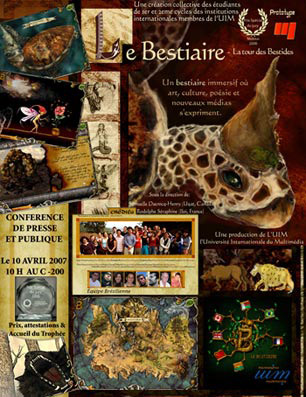
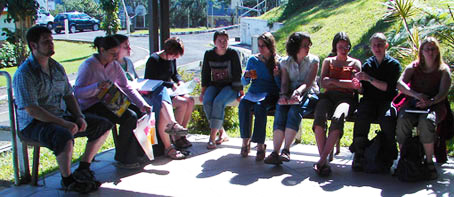
Co-direction, with Professor Rodolphe Séraphine (ILOI, Réunion Island), of the inter-university research-creation project The Immersive Bestiary of the International University of Multimedia (UIM), involving more than ten undergraduate institutions worldwide (China, Brazil, France and Réunion, Canada, etc.) and over fifty students, professors and researchers.
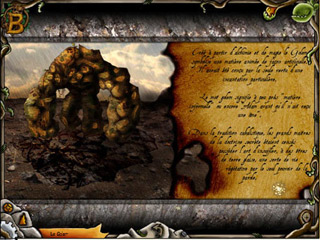
The world's first inter-university research-creation initiative in multimedia carried out at a distance, it included a four-week summer school in Réunion (May 2006) and won the Special Jury Prize at the 2006 international Möbius Awards (Montreal, October 15, 2006). This poetic, playful and artistic interactive DVD-ROM features legendary creatures from the folklore of UIM member countries evolving in an intelligent ecosystem. Funded by UQAT's Education unit and the FIR (2005-2008).

Animated short film “Le Soliste” (The Soloist)
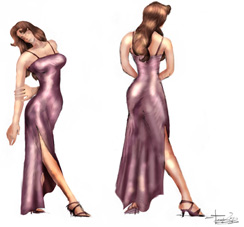
A French-Brazilian-Quebec co-production: a 4 min 45 s traditional and 3D animated short (fantasy comedy). Story and graphic research: Stéphanie Bédard. Characters, storyboard and final boards: Jubelson Tardin (Brazilian exchange student, working from Rio de Janeiro). Original score: Jacques Marchand, conductor of the Rouyn-Noranda Symphony Orchestra.
Synopsis: a musician plays a solo at the front of a symphony orchestra, virtuosically revealing the endless possibilities of a complex, polyphonic instrument: a sumptuous woman with whom he dances and whose body transforms into musical instruments.
Collaborative fine-arts project “Art for Trees”
An international project of symbolic tree sculptures meant to be installed in cities in various countries. Interacting mechanically with their surroundings through sensors, they pay tribute to what trees have given our civilizations: food, firewood, and the raw material of our houses and ships.